—
FRANKLIN CO., Va – With the November midterm elections less than a month away, questions are being raised about Virginia’s election security after at least two families received letters notifying them that their deceased relatives had their voting rights restored.
“Not in my wildest dreams have we ever gotten anything like that,” Franklin County resident William Ferguson said.
Ferguson said his family received a letter Sept. 26 notifying them that his brother-in-law, Jeff Turner, had his voting rights restored, despite Turner having died more than two years ago.
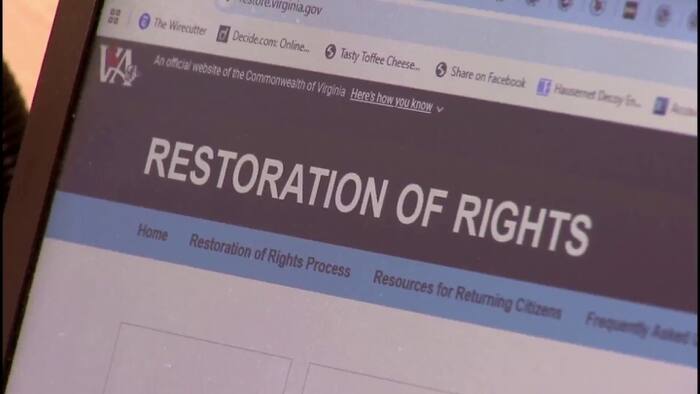
The letter is part of Gov. Abigail Spanberger’s efforts to restore civil rights to approximately 66,000 people with felony convictions.
Ferguson said the letter has left him questioning how thoroughly the state is checking its records before restoring voting rights.
“How secure is our election? Has nobody done research to figure out these people are deceased,” Ferguson said.
The letters include a QR code directing recipients to the Virginia Department of Elections website, where they can begin the voter registration process.
Ferguson said his family has access to Turner’s personal information and questioned whether someone could use that information to fraudulently register or vote under a deceased person’s identity.
“What would stop me from going now and saying that I’m Jeff Turner and getting the voting rights back?” Ferguson asked.
“We could probably walk into DMV today and get a birth certificate. All the questions that they would ask, I could answer.”
Receiving a voting rights restoration letter does not automatically register someone to vote or mean a ballot has been cast in their name.
Virginia does not generally require voters to present physical identification when voting by mail. The state also allows people voting in person without an acceptable form of identification to cast a regular ballot by signing a legally binding ID Confirmation Statement.
However, safeguards are in place to prevent voter fraud.
Under Virginia law, the Department of Health is required to provide the Department of Elections with a weekly list of deceased residents to help keep voter registration records up to date.
It remains unclear why the deceased individuals received voting rights restoration letters or whether their deaths had been reflected in the databases used to identify eligible recipients.
In an interview with 10 News affiliate WWBT, Spanberger acknowledged the concerns and said her administration is investigating.
“We are digging into it,” Spanberger said.
The governor suggested the issue could stem from state databases not properly communicating with one another.
“This is one of the reasons why we created the state digital service and why I hired a chief transformation officer with a focus on systems being able to talk to one another so that we do not have to contend just with. One database versus another where it is not wholly clear that that updates can occur,” Spanberger said.
A spokesperson for her office says getting the letter doesn’t automatically register someone to vote, and registering under someone else’s name could mean legal trouble.
“The restoration of an individual’s rights does not register them to vote. Virginia law is crystal clear that making intentionally false statements on a voter registration form is a felony. Anyone intentionally registering a deceased person to vote, attempting to cast a ballot in another person’s name, or attempting to cast multiple ballots — whether in person or absentee — should expect to be prosecuted for their unlawful conduct” a spokesperson said.
There is no evidence from the letters alone that anyone successfully registered or voted using a deceased person’s identity.
Copyright 2026 by WSLS 10 – All rights reserved.